 Essential Nose
Arnica
Arnica montana
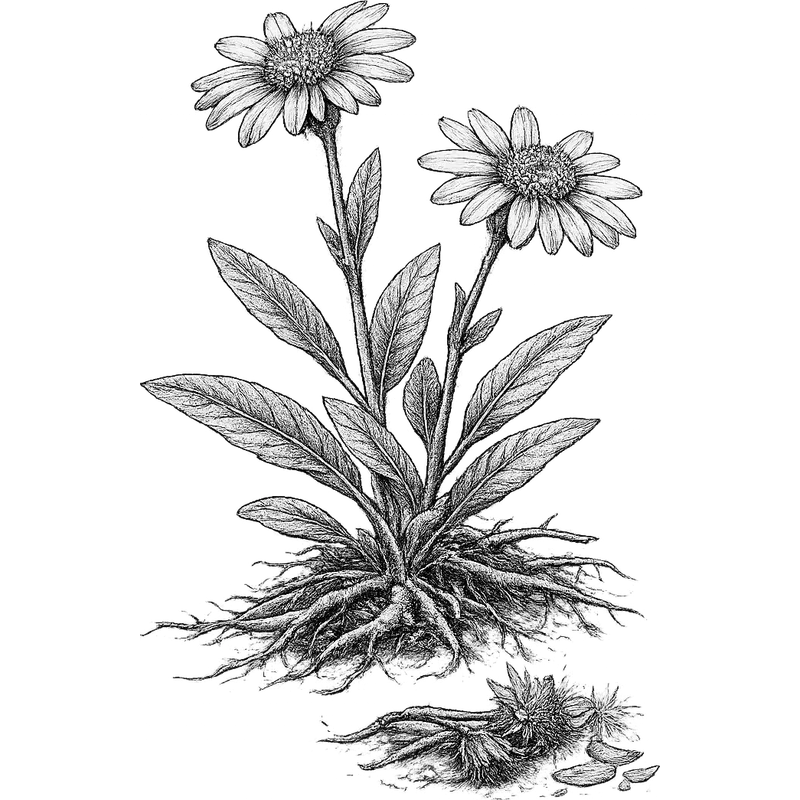
Almost all arnica sold is not an essential oil. It is a carrier oil the flowers have been steeped in, or a tincture, because distilling arnica gives a tiny and costly yield. That distinction matters, because helenalin and the other compounds arnica is researched for are too heavy to carry over into a distilled oil. A review of trials found arnica preparations beat placebo for bruising, swelling and pain after surgery and injury.[1] Those trials used gels, creams and tinctures, not the essential oil.[1]
- Also Known As
- Mountain Arnica, Leopard's Bane, Wolf's Bane, Mountain Tobacco
- Family
- Floral
- Perfumery Note
- Middle
- Intensity
- Light
- Extraction
- Steam Distillation, CO2 Extraction
- Plant Parts
- Flowers
- Origins
- Germany, Switzerland, Italy, France
- Effect
- Grounding & Centering, Sleep & Relaxation
- Aroma
- Herbal, Earthy, Warm
- Applications
- Diffusing & Inhalation, Skincare, Massage & Body
- Price
- $$$$Arnica montana is a protected species in many European countries; alpine harvesting is labor-intensive and yields per flower head are low, making authentic essential oil genuinely scarce