 Essential Nose
Caraway
Carum carvi
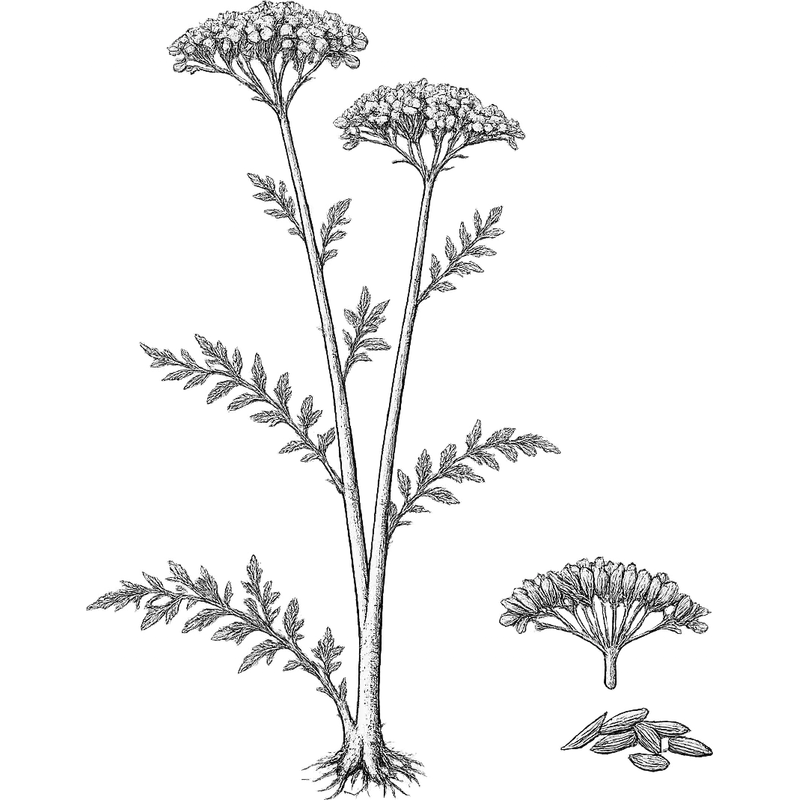
Caraway oil is half to two thirds carvone, the same compound as in spearmint but the mirror-image form. That is why one smells of rye bread and the other of chewing gum. Its long use for wind and bloating has some support: caraway oil combined with peppermint oil beat placebo for indigestion in randomised trials.[1] That was a combination, so caraway's own contribution is not separable.[1] In rats, caraway extract and oil eased induced colitis, and lab work found the oil active against MRSA.[2][3]
- Also Known As
- Caraway Seed, Meridian Fennel, Persian Cumin
- Family
- Spice
- Perfumery Note
- Middle
- Intensity
- Medium
- Extraction
- Steam Distillation
- Plant Parts
- Seeds
- Origins
- Netherlands, Egypt, Finland, Germany, Poland
- Effect
- Sleep & Relaxation, Grounding & Centering, Respiratory Support
- Aroma
- Spicy, Warm, Earthy, Anise-like, Sweet
- Applications
- Diffusing & Inhalation, Massage & Body, Cooking & Flavouring
- Price
- $$$$Caraway is a high-yield agricultural crop grown commercially across Europe and the Middle East; seed oil is abundant, inexpensive to produce, and widely traded as a commodity
References
- [1]Caraway as Important Medicinal Plants in Management of Diseases -- Mahboubi M. Natural Products and Bioprospecting, 2019
- [2]Comprehensive Study of Components and Antimicrobial Properties of Essential Oil Extracted from Carum carvi L. Seeds -- Liu C et al. Antibiotics, 2023
- [3]Effects of Carum carvi L. (Caraway) extract and essential oil on TNBS-induced colitis in rats -- Keshavarz A et al. Research in Pharmaceutical Sciences, 2013