 Essential Nose
Celery Seed
Apium graveolens
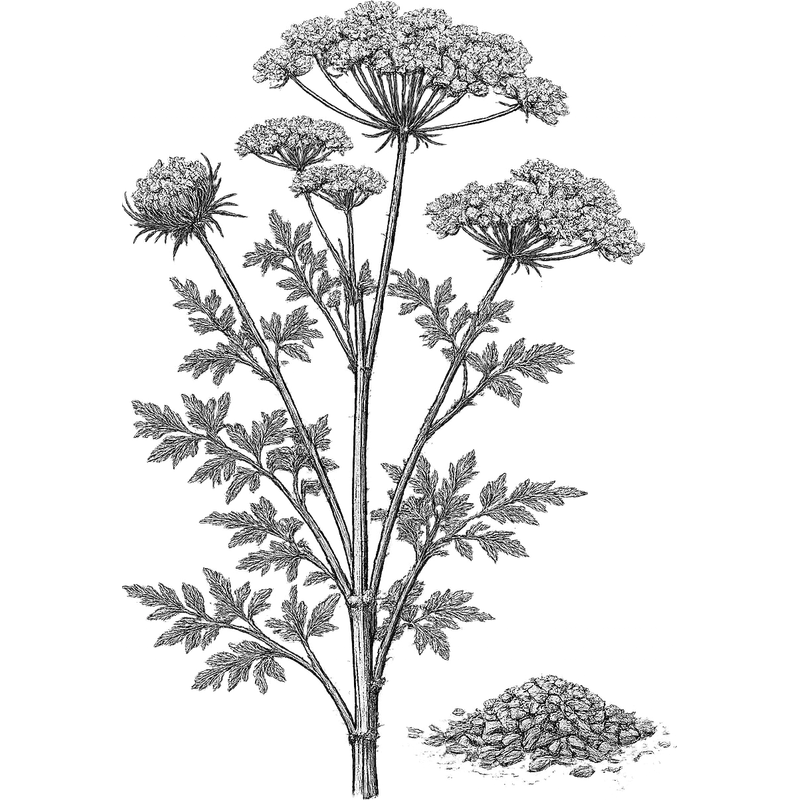
Celery seed oil smells nothing like a celery stick, warm and earthy rather than green and watery. The difference is phthalides, especially sedanolide, which are what give celery its savoury depth. Limonene and selinene fill out the rest, with a trace of apiol. In lab tests it held back Staphylococcus aureus, Pseudomonas and Candida, enough to suggest use as a natural preservative.[1] Aromatherapy uses it for digestive comfort and for settling nervous tension, which is tradition rather than trial evidence.
- Also Known As
- Celery Seed Oil, Wild Celery, Smallage
- Family
- Herbal
- Perfumery Note
- Middle
- Intensity
- Medium
- Extraction
- Steam Distillation
- Plant Parts
- Seeds
- Origins
- India, France, Hungary, China, Netherlands
- Effect
- Grounding & Centering, Sleep & Relaxation, Respiratory Support
- Aroma
- Warm, Spicy, Earthy, Herbaceous, Slightly Sweet
- Applications
- Diffusing & Inhalation, Cooking & Flavouring
- Price
- $$$$Celery seed is a widely cultivated agricultural crop with high seed yield; oil is readily available at moderate cost