 Essential Nose
Dill Seed
Anethum graveolens
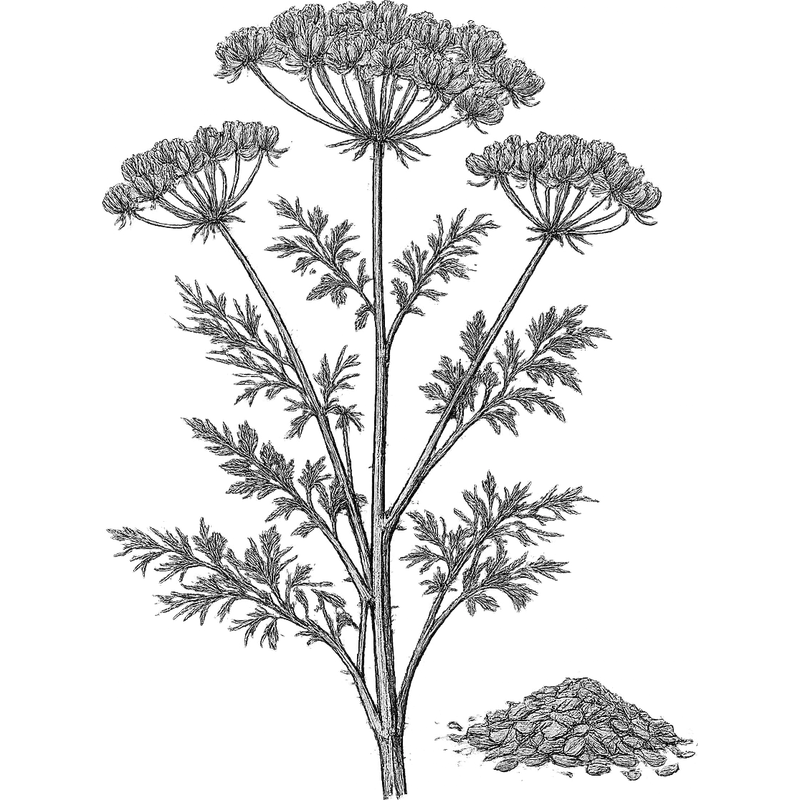
Dill seed oil is distilled from the ripe fruit, and smells warm and sweet rather than green. Half of it is carvone, the same compound that makes spearmint taste of spearmint. It is the mirror-image form of the molecule, which is why one smells of dill and the other of mint. Analysis of Bulgarian dill seed stored for over 35 years found the oil still half carvone and still fresh-smelling.[1] It held back Aspergillus mould and Candida yeast in lab tests.[1]
- Also Known As
- Dill Weed, Garden Dill, Sowa
- Family
- Herbal
- Perfumery Note
- Middle
- Intensity
- Medium
- Extraction
- Steam Distillation
- Plant Parts
- Seeds
- Origins
- India, Egypt, Germany, Netherlands, Iran
- Effect
- Warming & Comforting, Sleep & Relaxation
- Aroma
- Herbal, Fresh, Warm, Spicy-Sweet
- Applications
- Diffusing & Inhalation, Skincare, Massage & Body, Cooking & Flavouring
- Price
- $$$$High-yield annual crop grown at scale in India, Egypt, and Europe; seed distillation is straightforward with reliable supply chains