 Essential Nose
Lotus
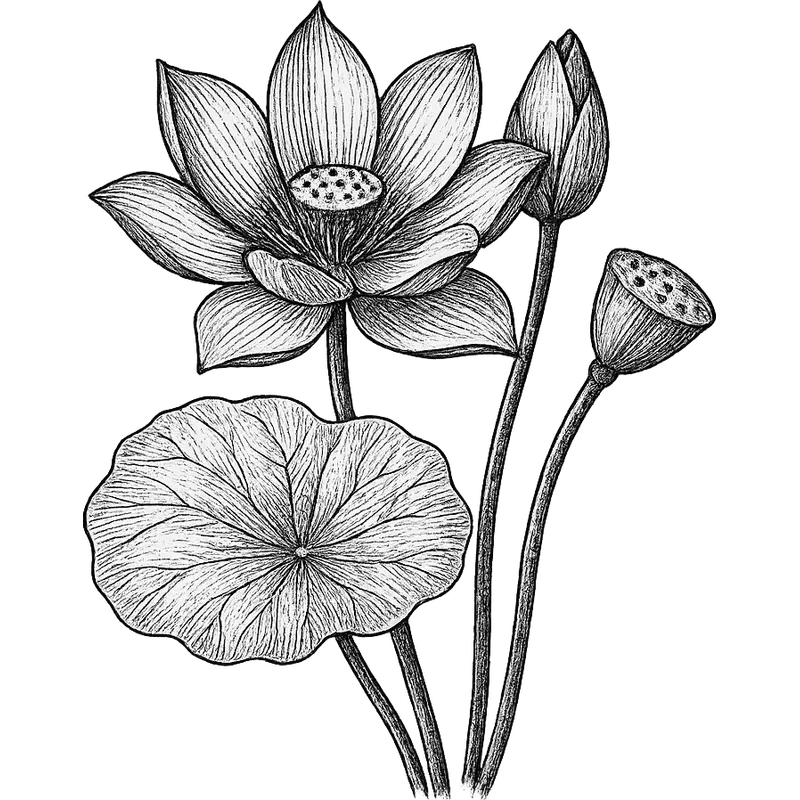
Lotus is never really distilled. Steam yields almost nothing, so what is sold is a solvent-extracted absolute. The scent compounds are benzyl benzoate, methyl benzoate and a sweet dimethoxybenzene note.[1] The alkaloids the plant is famous for, nuciferine and neferine, sit in the non-volatile part and do not carry into the absolute.[1] So the pharmacology attached to lotus as a plant is not a guide to what is in the bottle.
Pink Lotus
Nelumbo nucifera
- Also Known As
- Lotus, Sacred Lotus
- Family
- Floral
- Perfumery Note
- Middle
- Intensity
- Medium
- Extraction
- Solvent Extraction
- Plant Parts
- Flowers
- Origins
- India, Egypt, China
- Effect
- Grounding & Centering, Energy & Uplifting
- Aroma
- Floral, Sweet, Delicate
- Applications
- Diffusing & Inhalation, Skincare, Perfumery & Fragrance Making
- Price
- $$$$A specialty luxury floral oil produced by solvent extraction in small batches for high-end perfumery.
Pink lotus is the sacred lotus of India, the one in the Buddhist and Hindu imagery. The absolute is expensive because the yield is tiny and the flowers have to be processed fresh. It smells sweet, green and slightly spicy, with a soapy cleanness underneath. Benzyl benzoate and methyl benzoate carry most of that.[1] The alkaloids people associate with lotus do not survive into the absolute, so this is a perfumery material rather than a medicinal one.[1]
Blue Lotus
Nymphaea caerulea
- Also Known As
- Egyptian Blue Water Lily, Blue Egyptian Lotus, Sacred Blue Lily, Blue Water Lily
- Family
- Floral
- Perfumery Note
- Middle
- Intensity
- Medium
- Extraction
- Solvent Extraction
- Plant Parts
- Flowers
- Origins
- Egypt, Thailand, India
- Effect
- Romance & Mood, Grounding & Centering
- Aroma
- Floral, Honeyed, Sweet, Aquatic
- Applications
- Diffusing & Inhalation, Perfumery & Fragrance Making
- Price
- $$$$Extremely low absolute yield from hand-harvested flowers makes it one of the most expensive floral materials in perfumery.
Blue lotus is not a lotus but an Egyptian water lily, and it is heavily mythologised. The claim is that it carries psychoactive alkaloids, but analysis of genuine absolute found those either in traces or absent.[2] The scent comes from plain aliphatic compounds and benzyl alcohol instead.[2] Emergency reports of sedation and delusions after vaping blue lotus products most likely reflect adulterants sold under the name, not the flower.[3] Its real history is Egyptian ritual, steeped in wine and painted through tomb art, and its real use today is perfumery.[4]
References
- [1]Comparing Three Different Extraction Techniques on Essential Oil Profiles of Cultivated and Wild Lotus (Nelumbo nucifera) Flower - Banjerdpongchai R et al. Life, 2020
- [2]Chemical composition, market survey, and safety assessment of blue lotus (Nymphaea caerulea Savigny) extracts - Dosoky NS, Shah SA, Dawson JT, et al. Molecules, 2023
- [3]Toxicity From Blue Lotus (Nymphaea caerulea) After Ingestion or Inhalation: A Case Series - Schimpf MJ et al., Military Medicine, 2021
- [4]Nymphaea cults in ancient Egypt and the New World: a lesson in empirical pharmacology - Bertol E et al., Journal of the Royal Society of Medicine, 2004