 Essential Nose
Rosemary
Genus Salvia
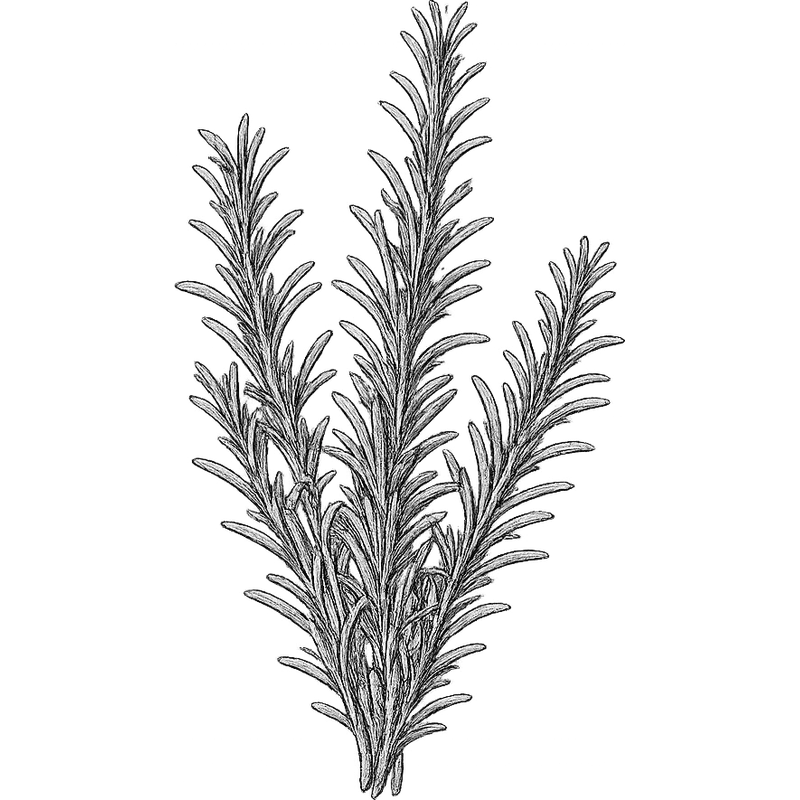
Rosemary is one plant that makes three quite different oils, depending on where it grows. The cineole form is the common one, sharp and eucalyptus-like, and it dominates world trade. The camphor form is the most pungent and the one used on tired muscles. The verbenone form is the softest and the gentlest on skin. In a study in people, the amount of cineole that reached the bloodstream after smelling rosemary tracked how fast they worked through mental tasks.[1]
Rosemary ct. Cineole
Salvia rosmarinus ct. cineole
- Also Known As
- Rosemary, Common Rosemary, Rosemary 1,8-Cineole, Rosmarinus officinalis
- Family
- Herbal
- Perfumery Note
- Middle
- Intensity
- Strong
- Extraction
- Steam Distillation
- Plant Parts
- Flowering tops
- Origins
- France, Spain, Tunisia
- Effect
- Focus & Mental Clarity, Respiratory Support, Energy & Uplifting
- Aroma
- Herbal, Fresh, Camphoraceous, Clean
- Applications
- Diffusing & Inhalation, Haircare
- Price
- $$$$The dominant commercial rosemary chemotype, grown at large scale in Morocco, Tunisia, and Spain; abundant supply and high oil yield make it the most affordable rosemary on the market
This is the rosemary oil you will actually find on a shelf, the one that makes up most of world trade. A third to a half of it is 1,8-cineole, the same compound that carries eucalyptus, so it smells sharp and clearing rather than herby. That compound gets into the blood through the lungs and crosses into the brain. In a controlled study in people, the more of it that reached the bloodstream after smelling the oil, the faster and more accurately they worked.[1] It also slows the enzyme that breaks down acetylcholine, a messenger the brain uses for memory and attention.
Rosemary ct. Camphor
Salvia rosmarinus ct. camphor
- Also Known As
- Spanish Rosemary, Camphor Rosemary, Rosmarinus officinalis
- Family
- Herbal
- Perfumery Note
- Middle
- Intensity
- Strong
- Extraction
- Steam Distillation
- Plant Parts
- Flowering tops
- Origins
- Spain, Morocco
- Effect
- Energy & Uplifting, Warming & Comforting, Respiratory Support
- Aroma
- Camphoraceous, Strong, Medicinal, Herbal
- Applications
- Diffusing & Inhalation, Massage & Body
- Price
- $$$$Produced mainly in Spain and France in moderate volumes; similar cultivation scale to the cineole chemotype but a slightly smaller market keeps pricing comparable
This is the fierce one, a fifth to nearly half camphor, and it smells like a medicine cabinet. It is the rosemary used in sports rubs. Camphor first fires the nerve endings that report heat and pain, then wears them out so they stop reporting.[2] That is why a camphor rub stings before it soothes. Camphor also reaches the brain and can trigger seizures, so this oil should be avoided in epilepsy and pregnancy.[3]
Rosemary ct. Verbenone
Salvia rosmarinus ct. verbenone
- Also Known As
- Corsican Rosemary, Verbenone Rosemary, Rosmarinus officinalis
- Family
- Herbal
- Perfumery Note
- Middle
- Intensity
- Medium
- Extraction
- Steam Distillation
- Plant Parts
- Flowering tops
- Origins
- Corsica, France, Sardinia
- Effect
- Grounding & Centering, Sleep & Relaxation
- Aroma
- Herbal, Sweet, Slightly Camphoraceous, Softer than ct. Cineole
- Applications
- Diffusing & Inhalation, Skincare, Haircare
- Price
- $$$$Primarily from Corsica where the specific microclimate favours this rare chemotype; limited growing area and smaller yields make it the most expensive rosemary, often three to four times the cineole price
The verbenone rosemary is grown mostly on Corsica and Sardinia, and it is the mild one. It holds much less camphor than the other two, which is what makes it sweeter, softer and safe enough for skincare. Verbenone itself makes up between a sixth and a third of the oil. Comparing the three forms side by side confirmed they behave differently, not just smell differently.[4] That is why the gentle one is chosen for anything going on skin, from face oils to scalp treatments.
References
- [1]Plasma 1,8-cineole correlates with cognitive performance following exposure to rosemary essential oil aroma - Moss M, Oliver L. Therapeutic Advances in Psychopharmacology, 2012
- [2]Camphor activates and strongly desensitizes the transient receptor potential vanilloid subtype 1 channel in a vanilloid-independent mechanism - Xu H, Blair NT, Clapham DE. Journal of Neuroscience, 2005
- [3]The Effects of Various Essential Oils on Epilepsy and Acute Seizure: A Systematic Review - Bahr TA et al. Evidence-Based Complementary and Alternative Medicine, 2019
- [4]Chemotypic Characterization and Biological Activity of Rosmarinus officinalis - Satyal P et al. Foods, 2017