 Essential Nose
Sage
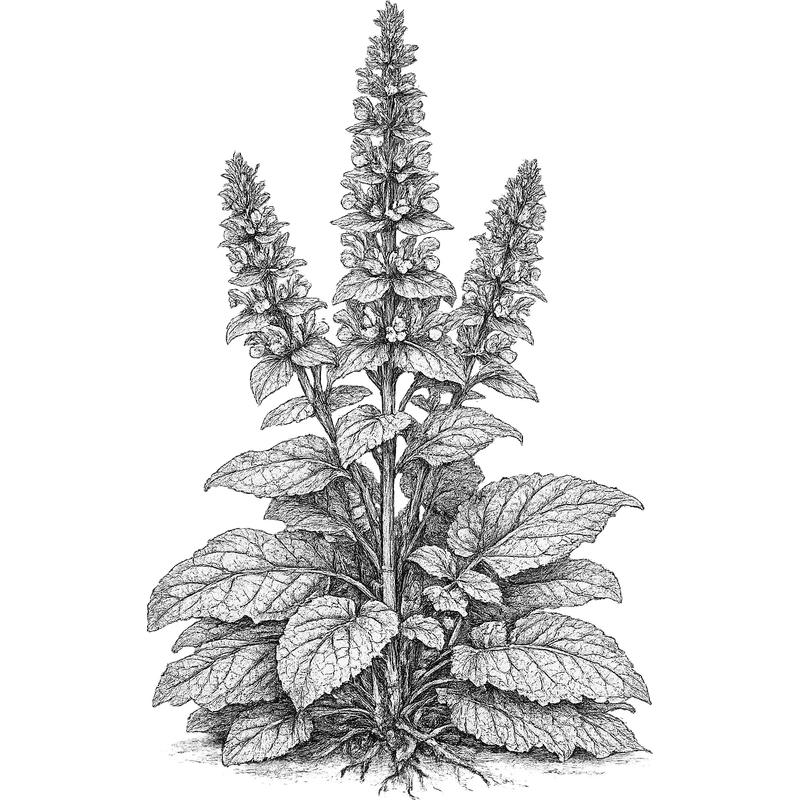
Two very different plants are sold as sage, and they are not interchangeable. Clary sage is smooth, sweet and faintly grape-like, up to three quarters esters, and gentle enough for regular use. Common sage is sharp and camphorous, and carries thujone, which is toxic to nerves in quantity.[2] In menopausal women, inhaling clary sage lowered the stress hormone cortisol and raised serotonin.[1] The drop was biggest in the women who were most prone to low mood.[1]
Clary Sage
Salvia sclarea
- Also Known As
- Clary
- Family
- Herbal
- Perfumery Note
- Middle
- Intensity
- Medium
- Extraction
- Steam Distillation
- Plant Parts
- Flowering tops, Leaves
- Origins
- France, Bulgaria, Russia
- Effect
- Grounding & Centering, Sleep & Relaxation
- Aroma
- Herbal, Earthy, Sweet
- Applications
- Diffusing & Inhalation, Skincare, Massage & Body, Perfumery & Fragrance Making
- Price
- $$$$A biennial plant that requires two years to mature; yields are moderate but reliable
Clary sage smells herbal and sweet at once, with an odd grape-like note that people either love or cannot place. Up to three quarters of it is linalyl acetate, the same compound that softens lavender. In a double-blind trial, abdominal massage shortened period pain. The oil was blended with lavender and marjoram, so the effect cannot be credited to clary sage alone.[3] A small study found its effects differ by sex, lowering pulse more in women than men when inhaled.[4]
Common Sage
Salvia officinalis
- Also Known As
- Sage, Garden Sage
- Family
- Herbal
- Perfumery Note
- Top
- Intensity
- Strong
- Extraction
- Steam Distillation
- Plant Parts
- Leaves
- Origins
- Spain, France, Balkans
- Effect
- Focus & Mental Clarity, Grounding & Centering, Respiratory Support
- Aroma
- Herbal, Camphorous, Woody
- Applications
- Diffusing & Inhalation, Cooking & Flavouring, Household & Cleaning
- Price
- $$$$Lacks the toxicity of Dalmatian sage; grows wild and is easy to distill
Common sage is the culinary one, and its oil is far stronger than the herb suggests. Up to two fifths of it is thujone, with camphor behind that, which is what makes it sharp and medicinal. Thujone is toxic to the nervous system in quantity, so this oil should be avoided in epilepsy and pregnancy, and kept well diluted.[2] In lab tests the oil held back a broad range of bacteria, working best against Staphylococcus aureus.[5] It also mops up the unstable molecules that damage cells, though only moderately.[5]
Sage Spanish
Salvia lavandulifolia
- Also Known As
- Spanish Sage, Lavender-Leaved Sage, Salvia lavandulaefolia
- Family
- Herbal
- Perfumery Note
- Top
- Intensity
- Medium
- Extraction
- Steam Distillation
- Plant Parts
- Leaves, Flowering tops
- Origins
- Spain, France
- Effect
- Focus & Mental Clarity, Grounding & Centering
- Aroma
- Herbal, Camphorous, Woody
- Applications
- Diffusing & Inhalation
- Price
- $$$$A wild-harvested Mediterranean shrub with modest yields, priced above common sage but below clary sage due to smaller-scale, mostly Spanish production
Spanish sage is common sage without the safety problem, because it carries almost no thujone. Camphor and cineole take its place, giving a cleaner, more eucalyptus-like herbal smell. In lab tests the oil slowed acetylcholinesterase, the same enzyme that Alzheimer's drugs target.[6] In a placebo-controlled trial, healthy young adults given a single dose did better on memory and attention tasks.[7] They also rated themselves calmer and more content, though the trial tested a single dose rather than regular use.[7]
References
- [1]Changes in 5-hydroxytryptamine and cortisol plasma levels in menopausal women after inhalation of clary sage oil - Lee KB, Cho E, Kang YS. Phytotherapy Research, 2014
- [2]The Effects of Various Essential Oils on Epilepsy and Acute Seizure: A Systematic Review - Bahr TA et al. Evidence-Based Complementary and Alternative Medicine, 2019
- [3]Pain relief assessment by aromatic essential oil massage on outpatients with primary dysmenorrhea: a randomized, double-blind clinical trial - Ou MC et al. J Obstet Gynaecol Res, 2012
- [4]Clary Sage Essential Oil and Its Effect on Human Mood and Pulse Rate: An in vivo Pilot Study - Mitic M et al. Planta Med, 2020
- [5]Salvia officinalis L. Essential Oils from Spain: Determination of Composition, Antioxidant Capacity, Antienzymatic, and Antimicrobial Bioactivities - Cutillas AB et al. Chemistry & Biodiversity, 2017
- [6]In-vitro inhibition of human erythrocyte acetylcholinesterase by Salvia lavandulaefolia essential oil and constituent terpenes - Perry NS, Houghton PJ, Theobald A, Jenner P, Perry EK. Journal of Pharmacy and Pharmacology, 2000
- [7]Positive modulation of mood and cognitive performance following administration of acute doses of Salvia lavandulaefolia essential oil to healthy young volunteers - Tildesley NTJ et al. Physiology & Behavior, 2005