 Essential Nose
Savory
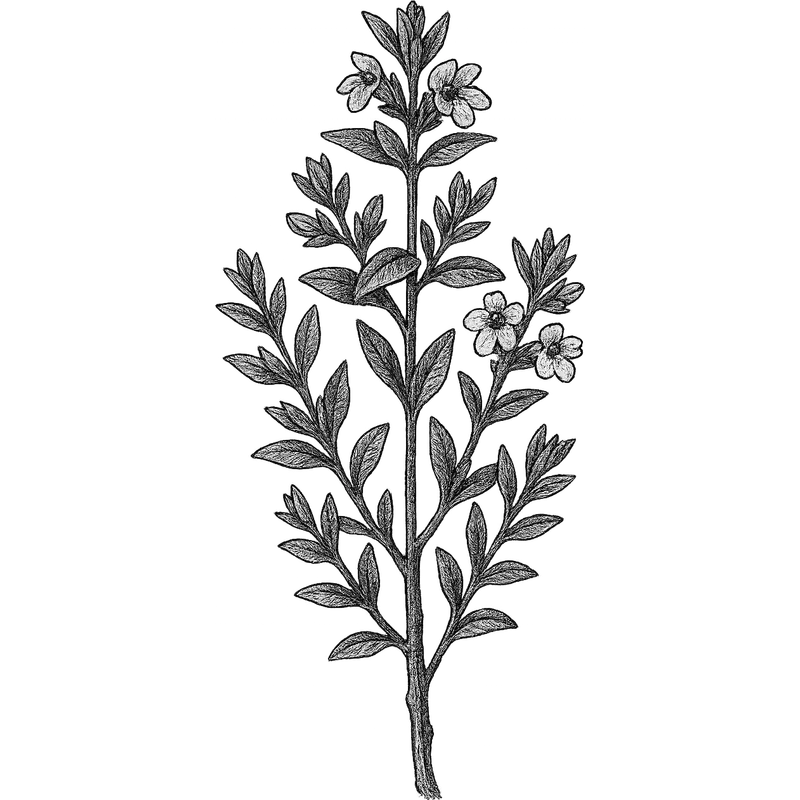
Savory is oregano's less famous relative, and just as fierce on skin. Winter savory is the perennial, sharper and higher in carvacrol. Summer savory is the annual, sweeter and gentler, though still a phenolic oil that needs diluting.[3] Winter savory is between a third and a half carvacrol, which puts it alongside oregano for holding back bacteria.[1] Combined with gentamicin it worked better than either alone, including against drug-resistant strains.[2]
Winter Savory
Satureja montana
- Also Known As
- Savory, Mountain Savory
- Family
- Herbal
- Perfumery Note
- Middle
- Intensity
- Strong
- Extraction
- Steam Distillation
- Plant Parts
- Flowering tops, Leaves
- Origins
- Spain, France, Albania
- Effect
- Grounding & Centering, Focus & Mental Clarity, Energy & Uplifting
- Aroma
- Herbal, Spicy, Sharp
- Applications
- Diffusing & Inhalation, Cooking & Flavouring
- Price
- $$$$A perennial herb; stronger and "hotter" than summer savory with similar yield
Winter savory is the perennial savory, and its oil is close to oregano in both smell and strength. Between a third and a half is carvacrol, with thymol behind it, the same phenols that make oregano so aggressive. Those compounds break open bacterial membranes, which is where the antibacterial reputation comes from.[1] Paired with the antibiotic gentamicin it did better than either on its own, including against drug-resistant strains.[2] Like oregano it is a skin irritant and needs heavy dilution.[3]
Summer Savory
Satureja hortensis
- Also Known As
- Bean Herb, Garden Savory
- Family
- Herbal
- Perfumery Note
- Middle
- Intensity
- Medium
- Extraction
- Steam Distillation
- Plant Parts
- Leaves, Flowering Tops
- Origins
- France, Bulgaria, Hungary, Iran
- Effect
- Grounding & Centering, Respiratory Support, Energy & Uplifting
- Aroma
- Herbal, Spicy, Sweet, Fresh
- Applications
- Diffusing & Inhalation, Cooking & Flavouring
- Price
- $$$$An easily cultivated, high-yield annual herb, keeping it comparably priced to other common culinary Lamiaceae oils.
Summer savory is the annual, and the milder of the two. It carries the same carvacrol and thymol but usually less of them, so it smells sweeter and less medicinal.[4][5] Testing found thymol was the main driver of its action against bacteria.[4] It also stopped Aspergillus mould growing and, more usefully, stopped it producing aflatoxin.[6] Reviews credit it with protecting cells and slowing a sugar-digesting enzyme, though it is still a phenolic oil that irritates skin undiluted.[7]
References
- [1]Phytochemical analysis and in vitro antimicrobial activity of two Satureja species essential oils - Skocibusic M, Bezic N. Phytotherapy Research, 2004
- [2]Satureja montana L. essential oil and its antimicrobial activity alone or in combination with gentamicin - Vitanza L et al. Microbial Pathogenesis, 2019
- [3]Allergic contact dermatitis from essential oil in consumer products: mode of uses and value of patch tests with an essential oil series - Barbaud A et al. Contact Dermatitis, 2023
- [4]Chemical composition and antimicrobial activity of Satureja hortensis and Trachyspermum copticum essential oil - Mahboubi M, Kazempour N. Iranian Journal of Microbiology, 2011
- [5]A comprehensive review of summer savory (Satureja hortensis L.): promising ingredient for production of functional foods - Ejaz A, Waliat S, Arshad MS, et al. Frontiers in Pharmacology, 2023
- [6]Inhibitory effects of Satureja hortensis L. essential oil on growth and aflatoxin production by Aspergillus parasiticus - Razzaghi-Abyaneh M, Shams-Ghahfarokhi M, Yoshinari T, et al. International Journal of Food Microbiology, 2008
- [7]Phytochemical profile and biological activities of Satureja hortensis L.: a review of the last decade - Fierascu I, Dinu-Pirvu CE, Fierascu RC, et al. Molecules, 2018