 Essential Nose
Tarragon
Artemisia dracunculus
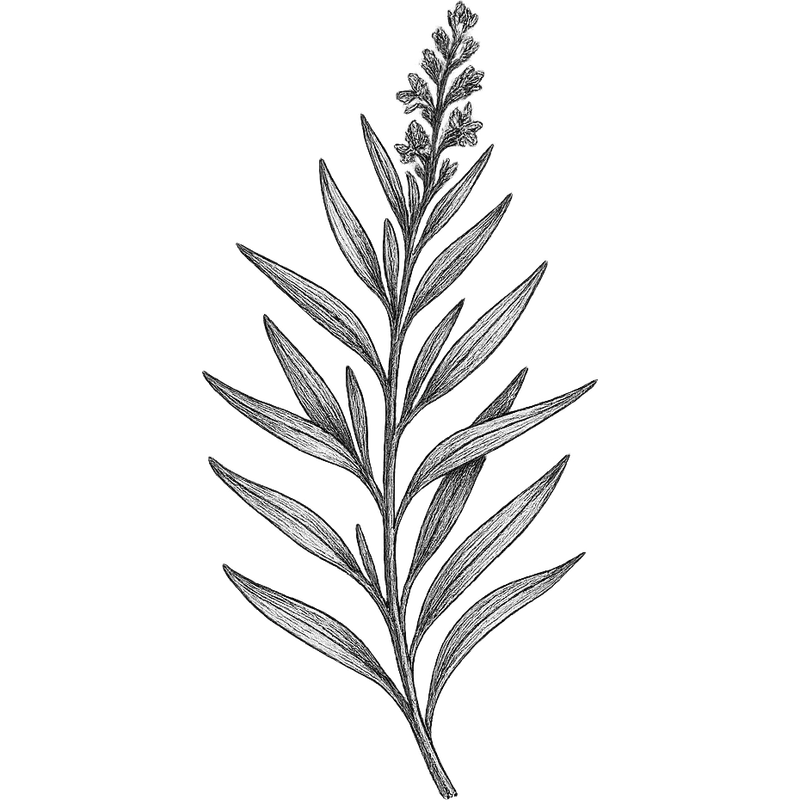
Tarragon oil is seven to eight tenths estragole, which is what gives it the aniseed smell.[1] That is also the problem. Estragole damages DNA in rodent liver studies and is treated as a genotoxic carcinogen.[2] It forms reactive fragments once the body processes it, and the concern is repeated or heavy exposure rather than a single use.[2] It is an oil to use rarely, in low dilution, and to avoid in pregnancy and with children.[2]
- Also Known As
- French Tarragon, Dragon Wort
- Family
- Herbal
- Perfumery Note
- Middle
- Intensity
- Medium
- Extraction
- Steam Distillation
- Plant Parts
- Leaves
- Origins
- France, Hungary, United States
- Effect
- Focus & Mental Clarity, Energy & Uplifting, Sleep & Relaxation
- Aroma
- Herbal, Anise-like, Sweet
- Applications
- Diffusing & Inhalation, Cooking & Flavouring
- Price
- $$$$A culinary staple, but the leaves require a significant amount of material for a small oil yield
References
- [1]Essential Oil Composition and Antigermination Activity of Artemisia dracunculus (Tarragon) - Fraternale D et al. Natural Products Communications, 2015
- [2]Estragole: DNA adduct formation in primary rat hepatocytes and genotoxic potential in HepG2-CYP1A2 cells - Schulte-Hubbert R et al. Toxicology, 2020