 Essential Nose
Turmeric
Curcuma longa
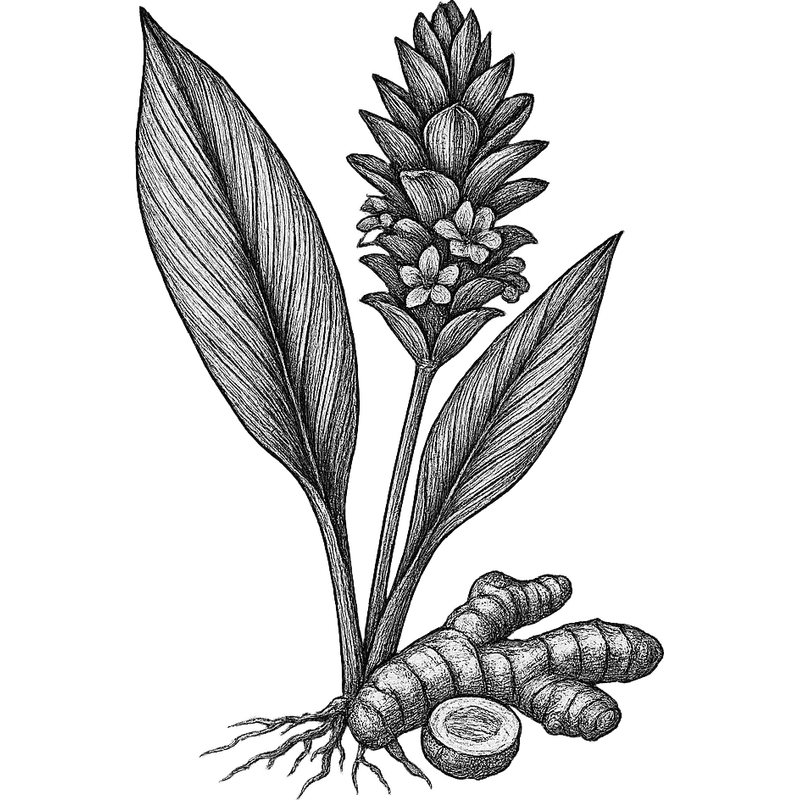
Turmeric oil is not curcumin, and that matters. The yellow curcuminoids everyone associates with turmeric are non-volatile and stay behind in the root. What distils over is turmerone, at a third to three fifths of the oil, giving a dry, earthy, slightly bitter spice. In mice, ar-turmerone reduced inflammation in the brain and protected memory after an immune challenge.[1] The whole oil eased pain and protected cells in animal testing.[2]
- Also Known As
- Indian Saffron, Curcuma
- Family
- Spice
- Perfumery Note
- Middle
- Intensity
- Medium
- Extraction
- Steam Distillation
- Plant Parts
- Leaves
- Origins
- India, Bangladesh, China
- Effect
- Grounding & Centering, Warming & Comforting
- Aroma
- Spicy, Earthy, Woody
- Applications
- Diffusing & Inhalation, Skincare, Cooking & Flavouring
- Price
- $$$$Less common than the root oil; requires distilling the green tops which have a lower oil yield
References
- [1]Aromatic-Turmerone Attenuates LPS-Induced Neuroinflammation and Memory Impairment by Targeting TLR4-Dependent Signaling - Chen M et al. Molecular Nutrition & Food Research, 2018
- [2]An evaluation of antioxidant, anti-inflammatory, and antinociceptive activities of essential oil from Curcuma longa - Liju VB, Jeena K, Kuttan R. Indian Journal of Pharmacology, 2011