 Essential Nose
Ylang Ylang
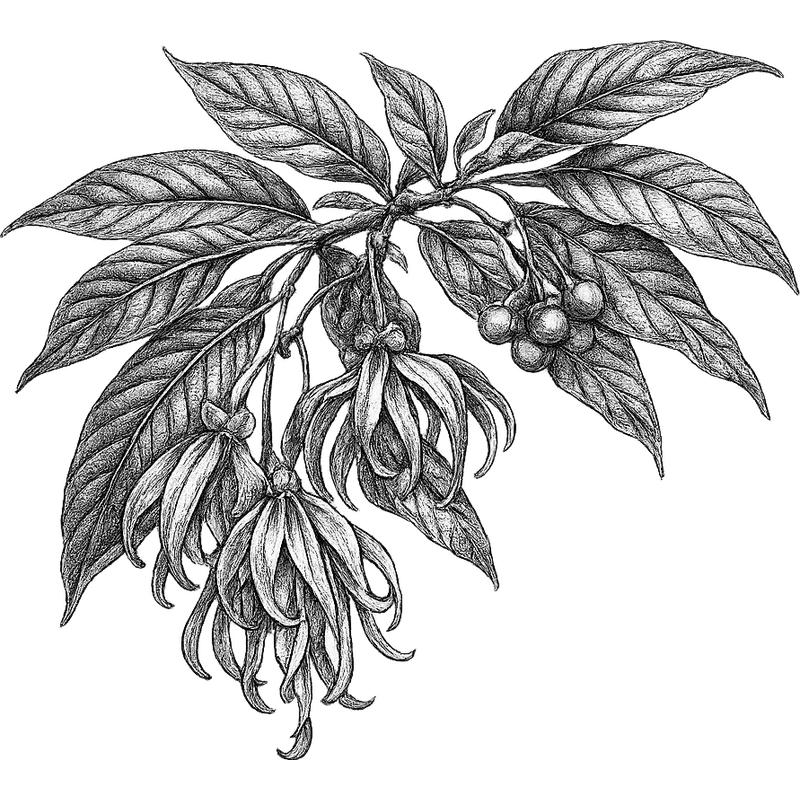
Ylang ylang is not one oil but a series, taken off the same still at different times. The first hour gives Extra, the sweetest and most intensely floral, almost narcotic. As distillation continues the light compounds run out and heavier, woodier ones take over, so the later grades smell drier. Detailed analysis of a full run found 161 separate compounds, 75 never spotted in the oil before, which is why the grades behave so differently.[3] In a small trial, breathing it in lowered both the upper and lower blood pressure readings in healthy men.[2]
Ylang Ylang
Cananga odorata
- Also Known As
- Cananga
- Family
- Floral
- Perfumery Note
- Base
- Intensity
- Strong
- Extraction
- Steam Distillation
- Plant Parts
- Flowers
- Origins
- Madagascar, Comoros, Indonesia
- Effect
- Romance & Mood
- Aroma
- Floral, Sweet, Exotic
- Applications
- Diffusing & Inhalation, Skincare, Massage & Body, Haircare, Perfumery & Fragrance Making
- Price
- $$$$Only the first few liters of a long distillation process; contains the highest concentration of esters
Ylang ylang smells sweet, creamy and heavily floral, somewhere between jasmine and banana. A quarter of it is benzyl acetate, with linalool adding the softness and a trace of cresyl methyl ether giving the slightly animal note underneath. When absorbed through the skin it lowered blood pressure and warmed the hands, and people said they felt calmer.[3] Breathing it in lowered blood pressure too, both the upper and lower numbers.[2] Both are small human studies rather than large trials.
Ylang Ylang Extra
Cananga odorata
- Also Known As
- Ylang Extra, Ylang Ylang Superior, First Fraction Ylang
- Family
- Floral
- Perfumery Note
- Middle
- Intensity
- Very Strong
- Extraction
- Steam Distillation
- Plant Parts
- Flowers
- Origins
- Madagascar, Comoros, Philippines
- Effect
- Romance & Mood, Sleep & Relaxation
- Aroma
- Intensely Floral, Sweet, Exotic, Heady, Jasmine-like
- Applications
- Diffusing & Inhalation, Skincare, Haircare, Perfumery & Fragrance Making
- Price
- $$$$Only a small first-run volume is collected per distillation batch; high demand from the fine fragrance industry drives prices significantly above the Complete grade
Extra is the first half hour to hour of the distillation, when the lightest and sweetest compounds come over. It is the most intensely floral grade, built on benzyl acetate and linalool, and the one perfumers pay for. Analysis across the whole run showed the light esters concentrate here, while the heavy woody compounds only appear in the later grades.[1] The calming and blood-pressure-lowering effects are shared across all the grades, not just this one.[4] What you pay extra for is the brightness, not the effect.
References
- [1]Improvement of ylang-ylang essential oil characterization by GCxGC-TOFMS - Brokl M et al. Molecules, 2013
- [2]Effects of Ylang-Ylang aroma on blood pressure and heart rate in healthy men - Jung DJ et al. Journal of Exercise Rehabilitation, 2013
- [3]Relaxing effect of ylang ylang oil on humans after transdermal absorption - Hongratanaworakit T, Buchbauer G. Phytotherapy Research, 2006
- [4]Traditional Uses, Phytochemistry, and Bioactivities of Cananga odorata (Ylang-Ylang): A Comprehensive Review - Tan LT, Lee LH, Yin WF, Chan CK, Abdul Kadir H, Chan KG, Goh BH. Evidence-Based Complementary and Alternative Medicine, 2015